Format
Two consultancy days. One on site with your people, one to analyse and write up.


GROW brings market, brand, technical and operational expertise into one room. Every piece of work starts with a fact-finding workshop, led by the Dairy Connect leadership team.
For ambitious businesses across the UK, Ireland and the EU.
Two consultancy days. One on site with your people, one to analyse and write up.
The people who know the product, the process, the numbers and the ambition, with the Dairy Connect leadership team. There is no one behind them for the work to be handed down to.
A written assessment across eight areas, the constraint that actually binds named plainly, and a costed, sequenced plan for what it needs.
£1,500 excluding VAT, credited in full against the programme if you go ahead. Full fees and terms.
Consultancy days at £750 a day, excluding VAT, quoted against the plan before anything starts. If GROW is not the right answer, we will say so.
Four workshops a quarter. Delivered by the leadership team themselves, so the number is capped on purpose. When they are gone we will tell you.
Why GROW exists
So the growth question gets answered more than once, in different languages, by advisers who may never meet. The business is left to join it all together.
A product that is not selling may appear to need a campaign. The real constraint could be capacity, margin, shelf life, compliance, an unclear proposition or a retail offer that is not yet commercially viable.
GROW looks at the whole business before recommending the work. Market, product, production and position, considered together by people who understand how one decision affects the others.
Joined-up expertise
Define the opportunity, understand the customer and focus resources on the channels and activity most likely to produce a commercial return.
Build a clear position around the product's quality, provenance, purpose and value, then turn it into what you say, what you publish and how you sell.
Test whether the product, pricing, packaging, capacity and commercial model are ready for the opportunity the business wants to pursue.
Identify gaps in specifications, quality systems, traceability, accreditation, claims, labelling and buyer requirements before they become barriers.
Improve yield, consistency, productivity and capacity by examining what happens from intake and processing through to maturation, packing and dispatch.
Prepare the product and business for entry into UK and EU markets, including positioning, paperwork, what buyers will expect and how you will reach them.
Sharpen the pitch, the pricing story and the presentation. Then make sure the business can actually win a listing, and keep it.
These are not seven disconnected packages. The workshop determines which combination matters and in what order.
The fact-finding workshop
The first step is a focused working session with the people who know the product, the process, the numbers and the ambition. We examine eight connected areas.
What does growth mean for this business, and over what timescale?
Is it distinctive, repeatable and capable of scaling without losing quality?
Where are the real constraints in yield, labour, maturation, packing, storage or logistics?
Do pricing, true margin, working capital and investment requirements support the plan?
Are specifications, traceability, accreditation, claims and labelling ready for the intended market?
Is the value clear, credible and relevant to the customer or consumer?
Is the business ready for retail, foodservice, distribution or direct sales, and able to service the opportunity?
Are the product, documentation, capacity, commercial terms and market approach ready for the UK or EU opportunity being pursued?
Five situations we are built for. None is a past client. They are the shapes of problem that bring a business to us, and how the disciplines above combine to answer them.
Mid-size dairy processor
Retailer-ready is a technical condition before it is a commercial one. We would work through specification, shelf life, traceability, accreditation and claims alongside yield and line productivity, so the technical file and the commercial pitch arrive in the same state of readiness.
Cheese producer entering the UK
Market entry is a positioning problem before it is a logistics one. We would test the proposition against what UK buyers and shoppers actually respond to, settle the pricing and pack story, and plan the route before anyone commits to volume.
Distributor pitching a range
A portfolio is not a list. We would find the category logic that makes the range worth a buyer's time, build the story around it, and prepare the presentation that has to survive a twenty-minute meeting and the questions after it.
Artisan producer scaling up
Scaling artisan production is where quality, cash and capacity collide. We would model the true margin and the working capital growth consumes, find the constraint that actually binds, and sequence the investment so the product survives the volume.
Protein brand driving trial
Sampling only pays when it is designed. We would build the activation around the product's real advantage, place it where the right people already are, at events and in store, and plan what happens to the interest it creates rather than leaving it on the floor.
Illustrative situations, not case studies or past engagements. No business named here has been a GROW client.
A concise written assessment identifying the strongest opportunities, the issues most likely to hold the business back and the sequence in which they should be addressed.
If further support would help, we set out a practical programme of consultancy days using the members of the leadership team best suited to the work. If GROW is not the right answer, we will say so.
Two consultancy days, £1,500 excluding VAT, credited in full against the programme if you go ahead. Full fees and terms.
None of these quite fits? That is what the first conversation is for. Tell us the problem in a sentence and we will tell you honestly whether we are the right people.
Advice, then access
Dairy Connect publishes The Dairy Mail and runs the forums at Cork and London. So when the assessment says route to market, the buyers, the processors and the people moving the category are already people we know. GROW uses that, once the business is ready to be introduced.
We don't hand over a list of names. We make the introduction when the business is ready and there is something in it for both sides, and we tell each of them what that is before the meeting happens.
Cork and London put your people and the people you want to know in the same building for a day. We plan who you should be meeting before you travel, rather than hoping the floor delivers.
Which categories are moving, which businesses keep coming back, who is reading about the problem you solve. That evidence feeds the market and commercial work in the assessment, not just the introduction at the end of it.
Introductions are part of the work, not a line item, and we take no fee from either side for making one. They follow the readiness assessment rather than replacing it: we introduce a business when it can service what it is being introduced to.
Looking for a supplier rather than advice? The Partner Directory is searchable by the problem you need to solve. Reading first? The Dairy Mail is where the demand shows up.
How it works
We bring the relevant decision-makers together and examine the business across market, product, production and position.
We identify what is actually holding the business back, the opportunities worth backing, and the decisions that need evidence before you spend.
You receive a practical, sequenced plan with responsibilities, proposed measures and the recommended consultancy input.
The appropriate members of the Dairy Connect leadership team work directly with your business. Support may be a short, focused piece of work or a programme over several months.
We assess what changed, what the evidence now says and what, if anything, should happen next.
Diagnose Prioritise Execute Review
What it costs
The review is a fixed price. Everything after it is quoted in days against a written plan, so you are never buying an open-ended engagement. Quoted in sterling; a euro equivalent is available on request.
£1,500 excluding VAT
Two consultancy days: one on site with your people, one to analyse and write up. You receive a written assessment across the eight areas, the constraint that actually binds named plainly, and a costed, sequenced plan for what it needs. Credited in full against the programme if you go ahead.
£750 per day, excluding VAT
Delivered by the leadership team, quoted against the plan before anything starts. That may be a short, focused intervention or a programme running across several months. Either way the days are agreed in advance, not accrued.
Commission the review on its own and decide afterwards. We would recommend it.
The review may find the opportunity is not where you thought it was, or that something needs fixing before the business goes anywhere near a buyer. It costs a great deal less to learn that in two days than six months into a programme.
All consultancy time described in the plan. Analysis, modelling, written reports and presentation materials. Attendance at the meetings the plan calls for. Management of any design or production process through to delivered assets.
Designer, photographer and print origination costs. Laboratory testing, analysis and certification fees. Retailer listing fees, promotional contributions and distribution charges. Trademark searching and registration. Travel and subsistence outside the UK and Ireland, at cost and agreed in advance.
On completion of each stage, unless we agree otherwise. Payment 30 days from the date of invoice.
Day estimates are professional estimates against the scope described. Any material change is agreed in writing before further work is done.
Some stages wait on other people's calendars: retailer range reviews, certification bodies, print lead times. Those can run across months without adding consultancy days.
What you tell us stays with the people delivering the work. It does not reach the editorial side of The Dairy Mail, and it is not discussed at the forums.
The assessment, the analysis and everything produced for you become yours on payment of the relevant invoice.
Fees are quoted and invoiced in sterling. A euro equivalent is available on request.
All costs are exclusive of VAT.
Leadership-led consultancy
GROW is delivered by Dairy Connect's leadership team, not handed to junior staff.
Product and production
Food manufacturing, processing and yield, line productivity, product and NPD technical, claims and labelling, food safety, standards and scheme compliance.
Market and commercial position
Customer and category insight, commercial strategy, brand positioning, buyer communication, market development and route-to-market planning.
Proposition and activation
Business development, partnerships, brand activation, customer-facing programmes and turning a commercial position into something people can see, understand and act on.
Where specialist input is required beyond the leadership team's remit, that need will be identified clearly rather than hidden inside the programme.
Where this comes from
The team behind GROW has worked across dairy manufacturing, technical and operational improvement, brand development, category activity, events and commercial partnerships.
That experience includes work connected with Love Cheese Live, the Dairy Crest portfolio, Lactalis, Fayrefield Foods, J Heler, Extons, Red Tractor and the Italian Trade Commission.
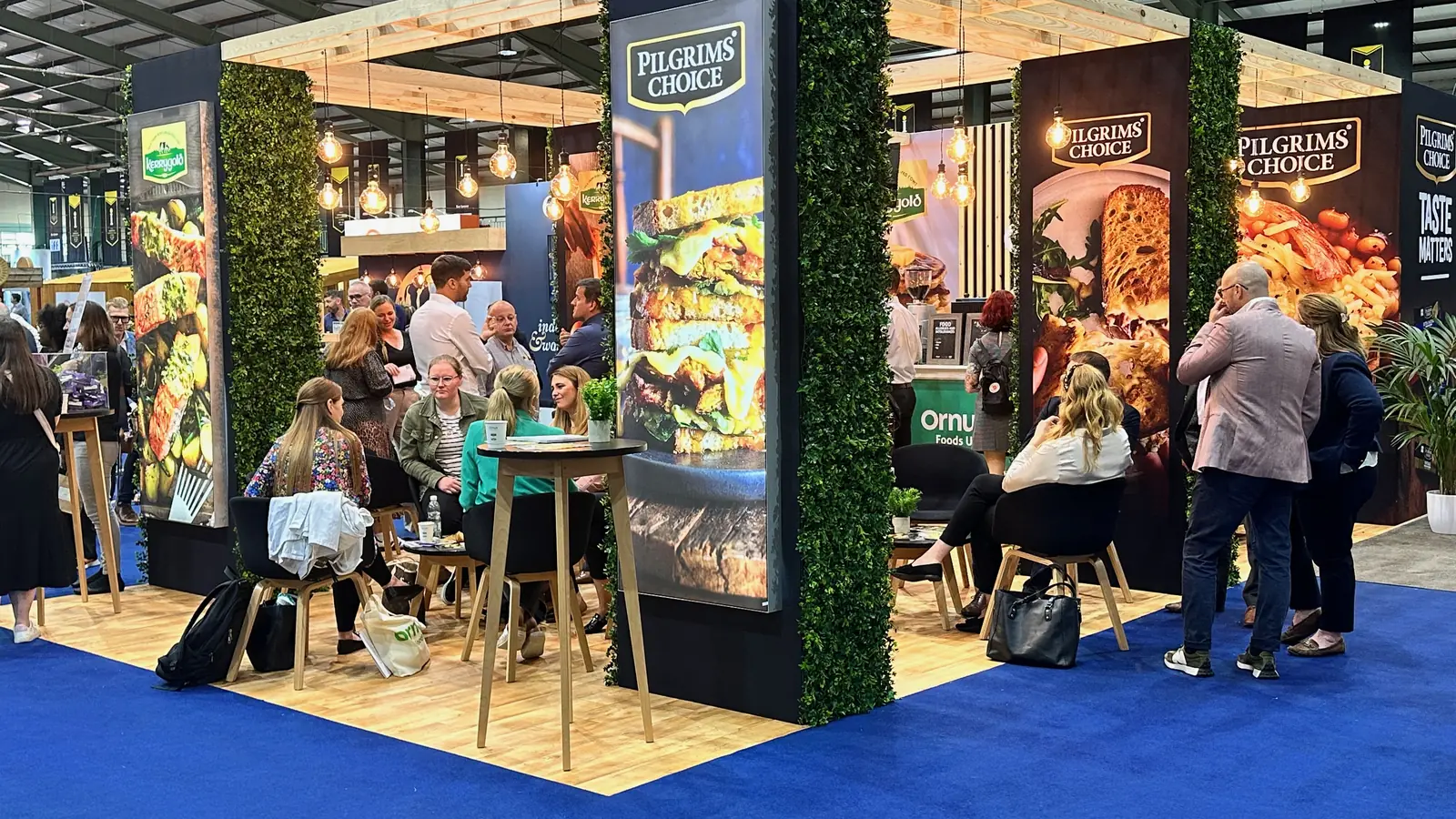
At Love Cheese Live, Debbie Stewart developed relationships with M&S, Lactalis, Saputo and Ornua as event participants, then designed the activation each brought to the floor, from theatre and sampling to product storytelling.
Outside the sector, the team's brand and campaign work includes Travis Perkins and Aviva, where the experience of operating at scale came from.
The point is not the list of names. It is the range of problems the team has already had to solve: making products work harder, making propositions clearer and creating credible routes between producers, buyers and consumers.
Clear boundaries
01
GROW does not commission or control Dairy Mail analysis. We label partner content as partner content and produce independent editorial separately. The two never share a byline.
02
GROW can improve readiness, decision-making and execution. It cannot guarantee regulatory approval, export access, investment, commercial contracts or a retail listing, all of which depend on third-party decisions and the client's continuing performance.
03
Where specialist input is required beyond the leadership team's remit, that need is identified clearly and the appropriate specialist named, rather than hidden inside the programme.
Availability
GROW is delivered by the Dairy Connect leadership team alongside their wider responsibilities across the platform. We therefore take on four fact-finding workshops a quarter, and a limited number of consultancy programmes at any one time.
When they're gone we'll tell you, rather than stretch and hope you don't notice.
That keeps the people who diagnose the problem involved in solving it. There is no one behind the leadership team for the work to be handed down to.
Tell us where the business is today, where you want it to go and what you believe is holding it back. One sentence is enough to start.
You do not need to know which of the seven disciplines you need. Working that out is the job.
GROW by Dairy ConnectStart with a fact-finding workshop.
Book workshop (opens the booking page in a new tab)